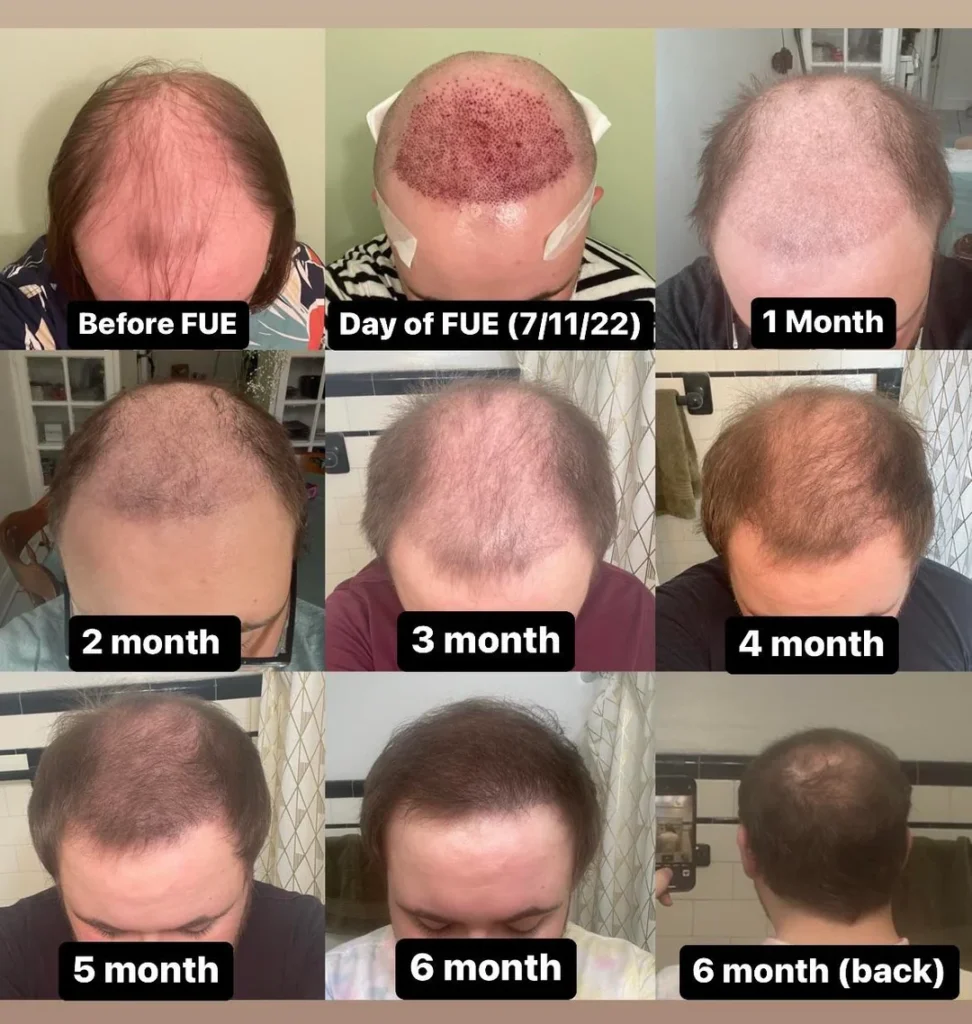
The hair transplant recovery timeline is one of the most misunderstood parts of the entire process. Many clinics focus heavily on the procedure itself, but what happens in the days, weeks, and months afterward is just as important for long-term results.
This recovery timeline walks through what most patients realistically experience after a modern hair transplant, from the first 24 hours through the one-year mark. While individual healing varies, this guide reflects typical recovery patterns for FUE and DHI procedures. If you’re new to the procedure, our Hair Transplant Explained guide breaks down how modern hair transplants work before diving into the recovery process
Day 0–1: Surgery day and immediate aftercare
Immediately after the procedure, the scalp will feel tender and tight. Mild swelling, redness, and small blood spots around grafts are normal. Check our post on what to buy before a hair transplant to be prepared. We also have a sleep guide if you want to dive deeper on how to prepare for sleep post-surgery.
What’s typical:
- scalp sensitivity and tightness
- redness around implanted grafts
- bandaging or protective headwear
- post-op instructions and medication
Most patients return to their hotel or home the same day and are advised to rest with their head elevated.
Days 2–4: Swelling and early healing
Swelling may increase temporarily, often moving down toward the forehead or eyes. This can look dramatic but is usually harmless and short-lived.
What’s typical:
- forehead or eyelid swelling
- continued redness
- strict sleeping position
- no touching or scratching
Clinics often recommend gentle saline sprays to keep grafts hydrated during this phase.
Sleeping Comfort During the First Week
During the first few nights after a hair transplant, many people are advised to sleep with their head elevated to help reduce swelling and avoid unnecessary pressure on the grafts. This can feel awkward at first, especially if you’re not used to sleeping on your back.
Some patients choose to use a neck pillow or an elevated pillow setup to help keep their head stable while sleeping. These types of pillows are commonly used during recovery to support a more upright position and limit movement overnight. View neck pillow options on Amazon.
Days 5–10: Scabbing and graft stabilization
Scabs form around each graft as part of the natural healing process. This stage often causes anxiety for first-time patients, but it is expected.
What’s typical:
- visible scabbing
- itchiness (without scratching)
- careful washing begins
- swelling subsides
By the end of this period, grafts are generally considered secure.
Gentle Hair Washing During Recovery
Hair washing typically resumes gradually during the recovery phase, following the specific instructions provided by the clinic. At this stage, the focus is usually on keeping the scalp clean while avoiding harsh products or aggressive rubbing.
Many people opt for mild, fragrance-free or sulfate-free shampoos during early recovery, as these are generally considered gentler on sensitive skin. The key is to follow professional guidance and introduce products slowly. Browse gentle, sulfate-free shampoo options on Amazon.
Days 10–14: Scab removal and appearance improvement
Scabs begin to fall off naturally or with gentle washing. Redness may still be present, especially in fair-skinned patients.
What’s typical:
- scabs shedding
- scalp still pink in recipient areas
- donor area healing noticeably
At this point, most patients can resume normal daily activities, though intense exercise may still be restricted.
Weeks 2–8: Shedding phase (shock loss)
This is one of the most misunderstood stages.
Transplanted hairs often shed as follicles enter a resting phase. This does not mean the transplant failed.
What’s typical:
- transplanted hairs falling out
- patchy appearance temporarily
- little visible progress
According to the Cleveland Clinic, this shedding phase is a normal part of the hair growth cycle following transplantation.
Months 3–4: Early regrowth begins
New hairs begin emerging from transplanted follicles. Growth is usually thin and uneven at first.
What’s typical:
- fine, soft new hairs
- slow and inconsistent growth
- improved scalp comfort
Patience is critical during this stage.
Months 5–6: Visible improvement
Hair becomes thicker and more noticeable. Coverage improves, and styling options begin to expand.
What’s typical:
- increasing density
- darker, stronger hair shafts
- growing confidence
This is often when patients first feel reassured about their decision.
Months 7–9: Maturation phase
Hair texture continues to improve, and growth becomes more uniform.
What’s typical:
- more natural appearance
- improved blending with native hair
- ongoing thickening
Most people are satisfied with results by this stage, though full maturation is still ongoing.
Months 10–12: Final results
By one year post-op, transplanted hair has usually reached its final appearance.
What’s typical:
- full density achieved
- hair behaves like natural hair
- results stabilize
Some patients continue to see subtle improvements beyond 12 months.
How recovery differs by technique
FUE and DHI recovery timelines are broadly similar, but there can be small differences.
FUE:
- slightly more visible donor area initially
- often faster overall scalp comfort
DHI:
- sometimes less visible scabbing
- longer procedure time may increase early sensitivity
For a full breakdown of technique differences, see: FUE vs DHI Hair Transplant: Key Differences Explained
Does recovery differ by country?
The biological healing process is the same everywhere, but aftercare experience can differ.
Patients treated locally often have easier access to in-person follow-ups. Medical tourism patients, especially those traveling to Turkey, usually receive intensive short-term aftercare followed by remote support.
For a location-based comparison, see: Turkey vs USA Hair Transplant: Costs, Risks, and Outcomes
Final thoughts on hair transplant recovery
Hair transplant recovery timeline is gradual and requires patience. Temporary shedding, slow regrowth, and uneven density are all part of the normal process.
Understanding the hair transplant recovery timeline helps set realistic expectations and prevents unnecessary stress. Successful outcomes depend not only on the procedure itself, but also on proper aftercare and time.
Disclosure: This article contains affiliate links. If you purchase through these links, I may earn a commission at no additional cost to you.